
Crying and ‘colic’ in babies: causes, comfort tips, and when to get help.
All over the world, most young babies cry. Some babies cry much more than others. Living with a baby who can’t be comforted is really hard. You need support for yourself.
The Art of Breastfeeding, 9th edition, La Leche League International, 2024.
Summary
- Crying is normal in young babies, but some cry far more than others. Prolonged crying is often called ‘colic’. There are many reasons babies cry.
- If your baby’s crying is sudden, intense, or very different from usual, seek medical help.
- Keeping your baby close, offering the breast frequently, and using a sling or baby carrier are time-tested ways to calm most (though not all) babies.
- Looking after an unhappy baby is exhausting. You need support too — and La Leche League is here to help.
Generations of mothers have learned that keeping their baby close and offering the breast whenever they show interest is the best recipe for a calm baby. But does this guarantee that your baby will never get upset? Probably not!
Unsettled behaviour and crying tends to start a week or so after birth, and to build over the next few weeks. It’s typically most intense towards the end of the day (just when you’re really tired and would like to switch off). Crying tends to reduce after the first two months. Some babies cry much more than others, and a few babies remain very unhappy, despite every effort to meet their needs. (1) Babies who cry a lot are often described as having ‘colic’, although the word simply means prolonged unexplained crying.
It can be really distressing for you if your baby is unsettled, uncomfortable, or inconsolable. If they are vomiting or have other physical symptoms, this may add to your concerns. Babies can be unsettled for many reasons, and it often takes time to work out what’s going on, and what might help. LLL Leaders are here to support you.
On this page
Reasons babies cry
Delaying feeds
Delaying or scheduling feeds is a common reason babies cry. Breastfeeding works best when you follow your baby and your body rather than a clock or a schedule. (2) In the early weeks and months, most babies nurse at least 8 to 12 times in 24 hours. (3) As they grow, their pattern may change (4) — you can continue to trust your baby to show you what they need.
Not enough milk
If your baby seems unsettled or unhappy a lot of the time, it’s important to make sure they’re getting enough milk. A baby who isn’t getting as much milk as they need:
- is usually either very miserable, or very sleepy.
- won’t gain weight well.
- may produce fewer dirty nappies than expected.
Your health visiting team can weigh your baby and work with you to decide whether anything needs further attention.
You can find more information in My baby needs more milk and How to increase your milk supply. LLL Leaders are here to help.
Oversupply (too much milk) or forceful flow
If you’re making a lot more milk than your baby needs, or your milk flows very fast:
- Your baby probably won’t be calm and relaxed at the breast.
- They might gag, cough, and splutter as they nurse.
- They may fuss and cry, arching away when the milk flows fast.
- If they come off mid-feed, milk may spurt across the room!
- Rather than the typical yellow poos of a breastfed baby, theirs may be green and frothy, occasionally or all the time.
- They might be very gassy and uncomfortable between feeds.
- They might find it hard to fall asleep at the breast, preferring to drift off in your arms or a sling.
Babies often grow into a faster milk flow, and if they’re still finding it difficult, there’s plenty that can be done to help. See our Oversupply article for more information.
Donating surplus milk is an amazing gift to the most vulnerable babies. You can find out about donating to a milk bank here.
Reflux
Reflux — bringing up milk — is very common in babies. If your baby refluxes but is growing well and doesn’t seem too bothered by it, there’s usually nothing you need to do (apart from dealing with the mess!) However, some babies find reflux more uncomfortable, and a small number can become quite unwell. (5, 6)
If your baby seems very distressed by bringing up milk, and the suggestions in our reflux article don’t help, it’s a good idea to talk with your health visiting team or GP.
Sore mouth
Teething can make some babies very miserable, while others hardly seem to notice. The first teeth usually appear between 6 and 12 months, but they can arrive any time from birth to after a year. Many babies show signs of teething long before a tooth appears.
You might notice:
- Red or sore-looking gums.
- A flushed cheek (in babies with light skin).
- More dribbling than usual.
- A strong urge to bite or chew.
- More crying or irritability than usual.
- Waking more often at night.
If you’re not sure whether your baby is teething or is unwell, talk to your health visitor, GP, or NHS 111. (7) You can find ideas to help teething babies here.
Thrush – a common yeast – can infect a baby’s mouth, making nursing very uncomfortable. It’s more likely if you or your baby have recently had antibiotics. The main symptoms are:
- white patches on the tongue, inside the cheeks, roof of mouth, or gums. If gently scraped, the skin underneath might bleed. You can see pictures here.
- fussing during and between feeds because of a sore mouth, and
- sometimes also a nappy rash that doesn’t improve with barrier creams.
See Thrush for more information.
Reacting to something you have eaten
It’s often suggested that breastfeeding mothers change their diet, to see if it helps their unsettled baby. A few babies do seem to react to something in their mother’s diet, but there are many other possibilities to consider first. (8) Caring for an unhappy baby is hard enough, without giving up your favourite foods!
You know your baby better than anyone: if you’ve ruled out other causes, and find that your baby seems uncomfortable or unsettled when you eat or drink a certain thing, and is happier when you avoid it, you can trust your own experience and instincts.
See Breastfeeding and Food Allergies for more information.
Illness
If your baby suddenly seems unhappy when they were previously fine, they may be feeling unwell. Trust your instincts — if you’re concerned, contact your health visitor, GP, or NHS 111.
Upset stomach
A baby or toddler with an upset stomach caused by illness may pass very frequent watery, foul-smelling poos — sometimes 12 to 16 a day — with little or no substance. They may also have other signs of illness, such as a fever or vomiting, although sometimes they seem well apart from the change in their poo, and being unsettled.
Even after the illness has passed, a baby or toddler who is otherwise well may continue to have loose or watery poos for a while, as their gut takes time to heal.
If your baby has diarrhoea it is important to continue breastfeeding, offering frequent, small feeds. If you are concerned about dehydration, seek medical advice.
Hand, foot, and mouth disease is a common viral illness. One of the symptoms is mouth ulcers, which can make it very painful to nurse.
Pyloric stenosis
Pyloric stenosis is a narrowing of the muscular wall of the tube between the stomach and small intestine. It’s more common in boys, and seems to run in families.
Symptoms typically appear between two and six weeks of age:
- increasing vomiting,
- projectile (forceful) vomiting,
- fewer wet nappies,
- poor weight gain, and
- lack of energy.
Pyloric stenosis is treated with surgery. If you think your baby might have it, get medical help.
Comfort techniques for unhappy babies
If you’re not sure what your baby needs, it makes sense to offer the breast first. Whether they’re hungry, tired, sad, frazzled, or bored, it’s a one-stop-shop that meets most of a baby’s needs, most of the time. But what if your baby gets even more upset when you try to nurse?
- A sling or baby carrier is often the thing most likely to help.
- Most babies love being carried – and it’s good for their development, too. (9)
- Research shows that babies who are carried more tend to cry less (10).
- It doesn’t always have to be you who carries your baby. While babies feel safest with their ‘main person’, a fresh pair of arms (and a chest that doesn’t smell of milk) may help calm a fed-but-frazzled baby.
You can find lots of ideas for calming babies in Fussy evenings with a newborn.
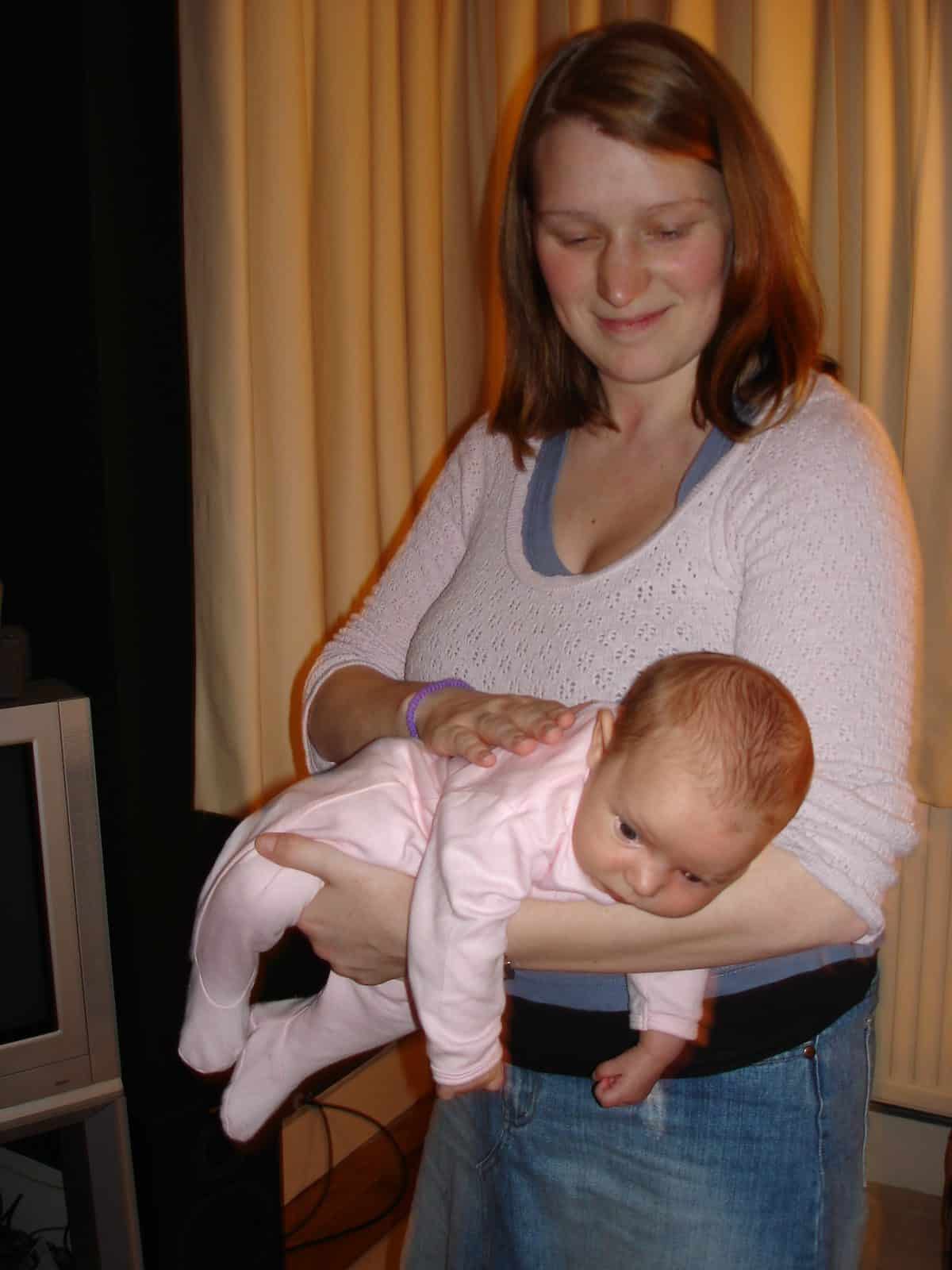
Unhappiness without an obvious cause
Maybe you’ve read through this whole page and nothing seems to fit – and your baby is still really upset. If your baby sounds like they’re in pain, it’s important to get them checked by a doctor to rule out common physical causes of crying, such as:
- Bruising, tight muscles, or even broken bones from position in utero, or from birth.
- Nappy rash or other sore area of skin.
- Eye irritation.
- Bladder or ear infection.
- Other illnesses.
Sudden, intense crying that is not normal for your baby needs to be checked out right away. (11)
What if you’ve tried everything and your baby is healthy – but still unhappy?
Some babies cry a great deal, no matter how carefully their needs are met. Living with a baby who is hard to soothe can be exhausting, isolating, and emotionally draining. If this is your experience, it’s important to know that you’re not failing — and that you deserve care and support, too.
Babies are born with different temperaments. (12) Some babies are more sensitive to the world around them, had a tougher start, or simply find life harder than others. These differences aren’t caused by anything you’ve done; they’re part of who your baby is. Sensitive babies feel things more intensely and need more time, closeness, and support to feel safe.
Caring for a sensitive, harder-to-soothe baby can take a real toll, and you need extra help too. If you have a partner, they may be one important source of help, but these caring roles can also be taken on by friends, family members, or others in your support network.
Supportive adults can help not by “fixing” the baby, but by creating space for you and your baby to cope and recover. This might include taking care of everyday tasks, protecting quiet time, and making sure you get regular chances to eat and rest. Taking responsibility for meals, household jobs, older children, or practical arrangements can free you to focus on responding to your baby.
Emotional support matters just as much. Listening without trying to solve the problem, offering reassurance, and reminding you that you’re doing a good job can make a huge difference. Supporters can also help by noticing when things feel overwhelming and encouraging extra help — whether from friends, family, health professionals, or breastfeeding supporters. La Leche League Leaders and local groups can offer understanding, reassurance, and a safe, non-judgemental space to talk things through.
Sometimes it takes years to understand why a baby found life so hard – and sometimes we never know. By responding with patience, offering comfort, and simply being present, you are giving your baby the very best start, helping them grow into a calmer, happier, and more resilient child.
Written by Sue Cardus and mothers of LLLGB.
Updated by Nicola Coles-Carr, Jayne Joyce, and Charlotte Allam, February 2026.
Review date: February 2029.
If this article has helped you, please consider supporting LLLGB with a donation. Every gift, however small, helps keep breastfeeding information and support flowing.
Further Reading
From our website
The Art of Breastfeeding 9th edition, 2024, Pinter & Martin Ltd, Chapter 18: Crying and Colic (and see chapters about different ages).
Other resources
Cry-sis Helpline: https://www.cry-sis.org.uk/ – free support for parents of babies who cry a excessively.
Reflux in babies (NHS)
Hand, foot and mouth disease (NHS)
Diarrhoea and vomiting (NHS)
Why Infant Reflux Matters, by Carol Smyth (Pinter and Martin, 2021).
References
- Vermillet, Arnault-Quentin et al. “Crying in the first 12 months of life: A systematic review and meta-analysis of cross-country parent-reported data and modeling of the “cry curve”.” Child development vol. 93,4 (2022): 1201-1222. doi:10.1111/cdev.13760
Available at https://srcd.onlinelibrary.wiley.com/doi/10.1111/cdev.13760 (accessed 27 February 2025)
- Zhao, Shuliang et al. “Effects of responsive breastfeeding intervention on breastfeeding and infant growth in China: A randomised controlled trial.” Maternal & child nutrition vol. 20,3 (2024): e13654. doi:10.1111/mcn.13654
Available at https://www.researchgate.net/publication/380034237_Effects_of_responsive_breastfeeding_intervention_on_breastfeeding_and_infant_growth_in_China_A_randomised_controlled_trial (accessed 17 February 2026)
- https://www.nhs.uk/baby/breastfeeding-and-bottle-feeding/breastfeeding/the-first-few-days/ (accessed 17 February 2025)
- Geddes, Donna Tracy et al. “25 Years of Research in Human Lactation: From Discovery to Translation.” Nutrientsvol. 13,9 3071. 31 Aug. 2021, doi:10.3390/nu13093071
Available at https://pmc.ncbi.nlm.nih.gov/articles/PMC8465002/ (accessed 17 February 2025).
- https://www.nhs.uk/conditions/reflux-in-babies/ (accessed 17 February 2025)
- NICE guideline, Gastro-oesophageal reflux disease in children and young people: diagnosis and management http://www.nice.org.uk/guidance/ng1/resources/gastrooesophageal-reflux-disease-recognition-diagnosis-and-management-in-children-and-young-people-51035086789(accessed 17 February 2025)
(accessed 17 February 2026)
- Mehta, Shriya et al. “Trends in use of specialized formula for managing cow’s milk allergy in young children.” Clinical and experimental allergy : journal of the British Society for Allergy and Clinical Immunology vol. 52,7 (2022): 839-847. doi:10.1111/cea.14180
Available at https://onlinelibrary.wiley.com/doi/10.1111/cea.14180 (accessed 17 February 2026)
- Norholt, Henrik, et al. “Babywearing Practices and Effects on Parental and Child Physical and Psychological Health.” Academic Journal of Pediatrics & Neonatology, vol. 11, no. 5, June 2022, Article 555876. DOI:10.19080/AJPN.2022.11.555876.
Available at https://juniperpublishers.com/ajpn/pdf/AJPN.MS.ID.555876.pdf (accessed 17 February 2026)
- Hunziker, U A, and R G Barr. “Increased carrying reduces infant crying: a randomized controlled trial.” Pediatrics vol. 77,5 (1986): 641-8.
Available at https://www.babywearing.co.uk/wp-content/uploads/2013/04/Infant-Carrying-Hunzkier.pdf (accessed 17 February 2026)
- Matijasic, Nusa, and Zdenka Plesa Premilovac. “Inconsolable Crying in Infants: Differential Diagnosis in the Pediatric Emergency Department.” Clinical pediatrics vol. 58,2 (2019): 133-139. doi:10.1177/0009922818798389
- Gartstein, Maria A, and Marco A Ramirez Gonzalez. “Temperament development in infancy: What we have learned about the origins of individual differences in the past 25 years.” Infant behavior & development vol. 80 (2025): 102101. doi:10.1016/j.infbeh.2025.102101
Available at https://pmc.ncbi.nlm.nih.gov/articles/PMC12525024/ (accessed 17 February 2026)
Copyright LLLGB 2026